



来自:FRM > 一级 > Financial Markets and Products 2020-01-18 17:45
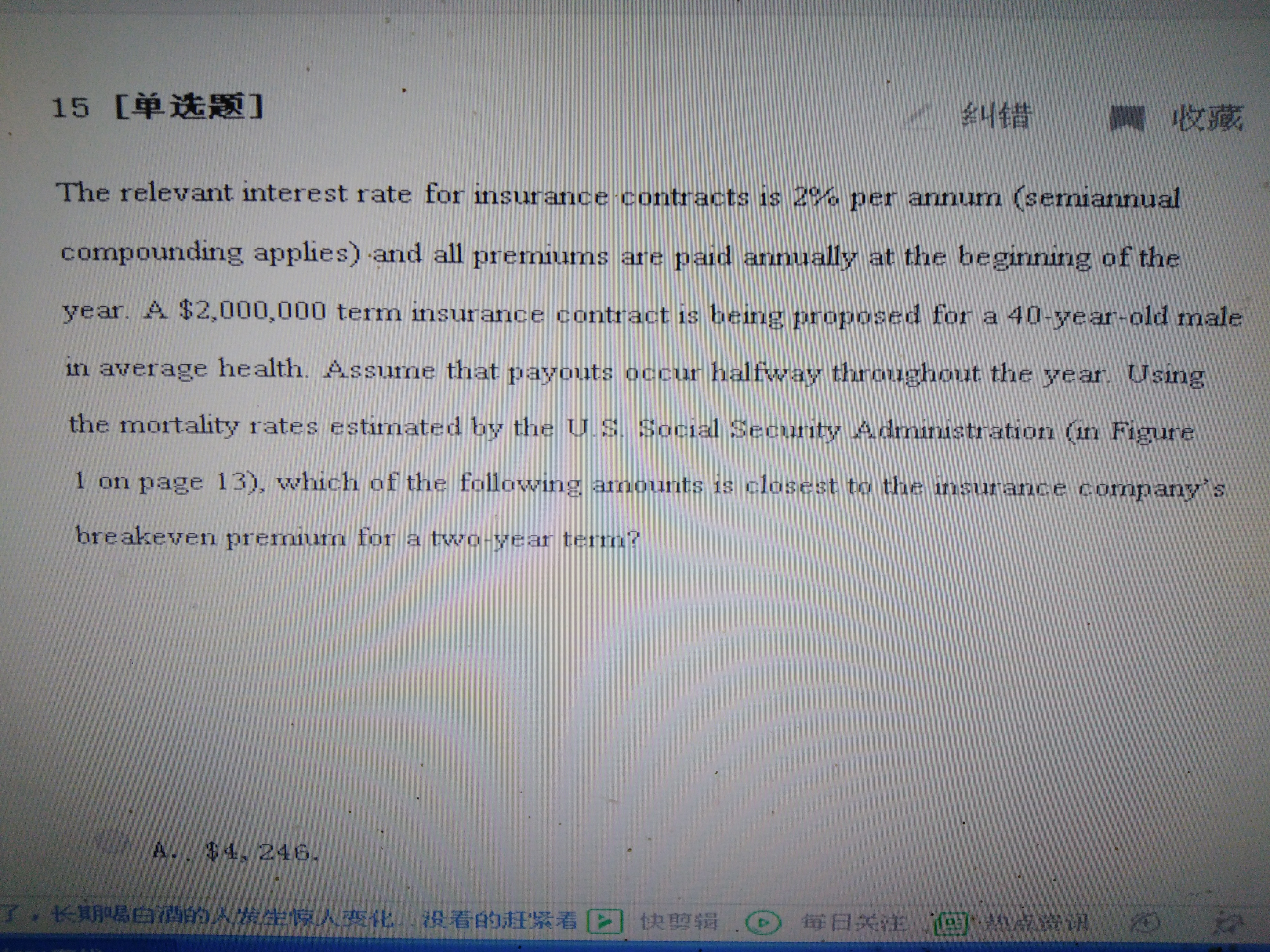
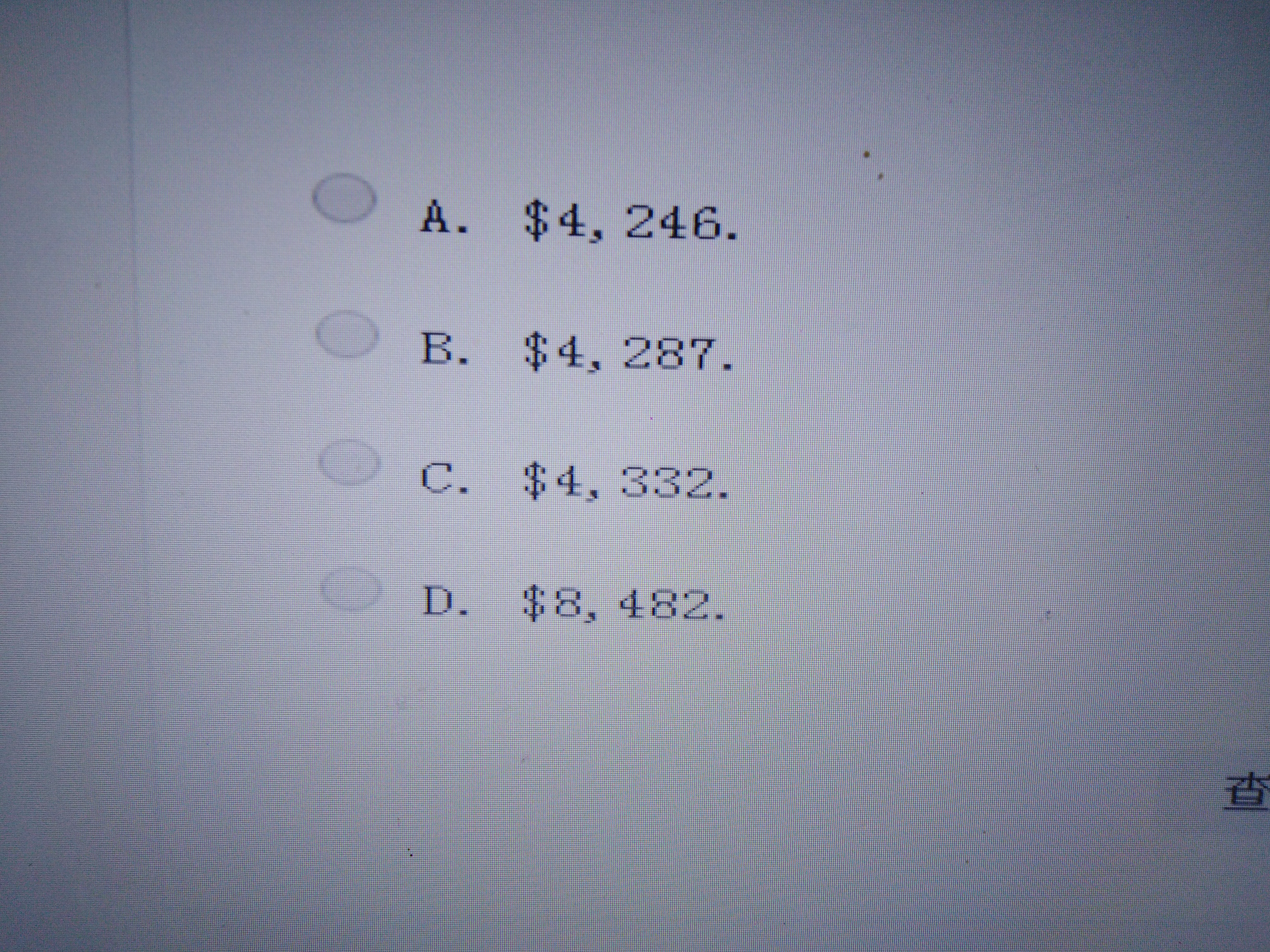
这道题怎么算?
 查看更多
查看更多
151****0649
提问
12
上次登录
2265天前
 查看更多
查看更多
151****0649
提问
12
上次登录
2265天前

马刚 2020-01-27 16:20
致精进的你:
请参考notes中的insurance company and pension plans章节,里面的例题对此题的原理有详细的解释。 您提的问题答案解释如下: One-year term: The expected payout for a one-year term is 0.002092 x $2,000,000 = $4,184. Assuming the payout occurs in six months, the breakeven premium is $4,184 / 1.01 = $4,142.57. Two-year term: The expected payout for a two-year term is the sum of the expected payouts in both the first year and the second year. The probability of death in the second year is (1 — 0.002092) x 0.00224 = 0.0022353, so the expected payout in the second year is 0.0022353 x $2,000,000 = $4,470.63. If the payout occurs in 18 months, then the present value is $4,470.63 / (1.01)3 = $4,339.15. The total present value of the payouts is then $4,142.57 + $4,339.15 = $8,481.72. The first premium payment occurs immediately (i.e., beginning of the first year) so it is certain to be received. However, the probability of the second premium payment being made at the beginning of the second year is the probability of not dying in the first year, which is 1 - 0.002092 = 0.997908. The present value of the premium payments is as follows (using Y as the breakeven premium): Y + (0.997908Y / 1.012) = 1.978245Y. Computing the breakeven annual premium equates the present value of the payouts and the premium payments as follows: 8,481.72 = 1.978245Y. Solving for Y, the breakeven annual premium is $4,287.50. Response A ($4,246) is not correct because it performs the computation on the assumption that all payouts occur at the end of the year instead of halfway throughout the year. Response C ($4,332) is not correct because it did not apply any discounting (at the 1% semiannual rate). Response D ($8,482) is not correct because it is simply the total present value of the payouts.
The real talent is resolute aspirations.
真正的才智是刚毅的志向。